300 poses painting took 500 years to figure out — so you never freeze in front of a person again
A PRACTICAL PORTRAIT GUIDE BUILT ON TOP OF 300 WORKS OF ART. WORKS FOR PAID SHOOTS, PHOTOS OF YOUR FRIENDS, AND EVEN YOUR SELFIES.
I WANT THE 300 REFERENCES FOR US$44 ➜
The Art of Portraiture workshop sold for US$397.
The 6 volumes launch today for
one payment, via Pix or card · launch pre-sale
Some images never leave your head. That's not luck.
You saw about two thousand images this week. You don't remember a single one.
But you remember these — and you probably never stood in front of any of them.
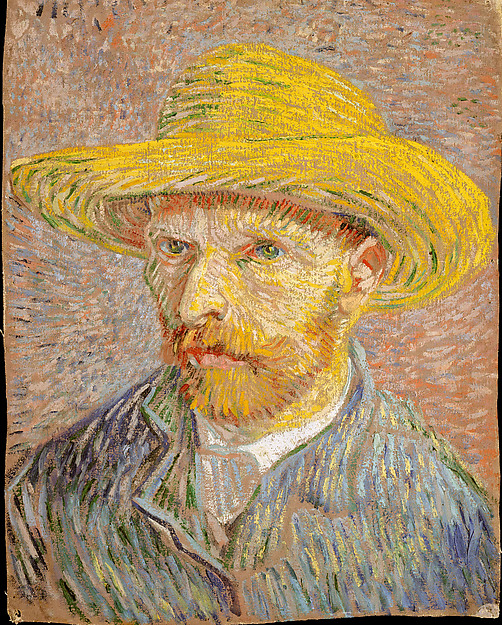
Self-Portrait with Straw Hat · Van Gogh · 1887
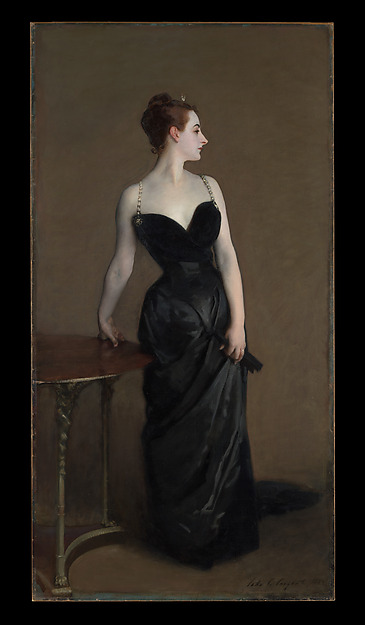
Madame X · John Singer Sargent · 1883-84
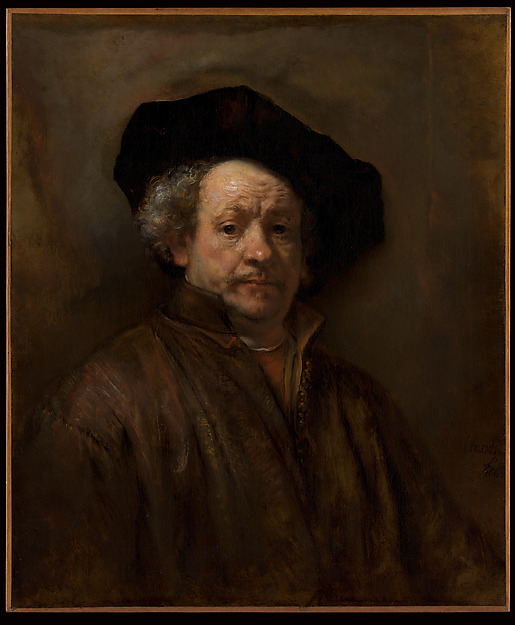
Self-Portrait · Rembrandt · 1660
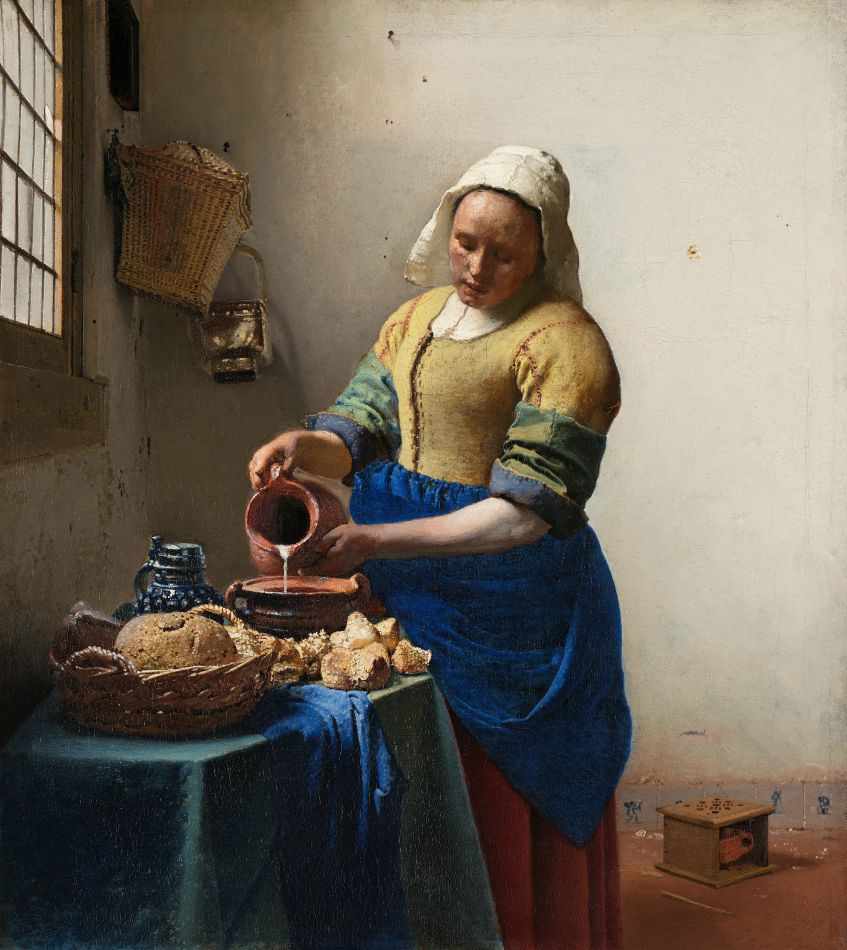
The Milkmaid · Vermeer · c. 1660 · Rijksmuseum
These images crossed centuries because they were built to endure. There's a set of decisions that makes an image stick in the viewer's memory — and painting spent 500 years testing those decisions, one by one, until it knew which ones worked.
That collection of decisions is what became this guide.
You raise the camera to photograph someone. Now what?
"Make yourself comfortable." "Relax." "Look over there."
The person crosses their arms. You take forty nearly identical shots and end up picking the three where they look least stiff. It happens the same way in paid shoots, family birthdays, and when taking a friend's profile picture.
It wasn't the camera that failed. It wasn't the light.
It was that you didn't know what to ask for.
Van Gogh painted this portrait 7 weeks before he died
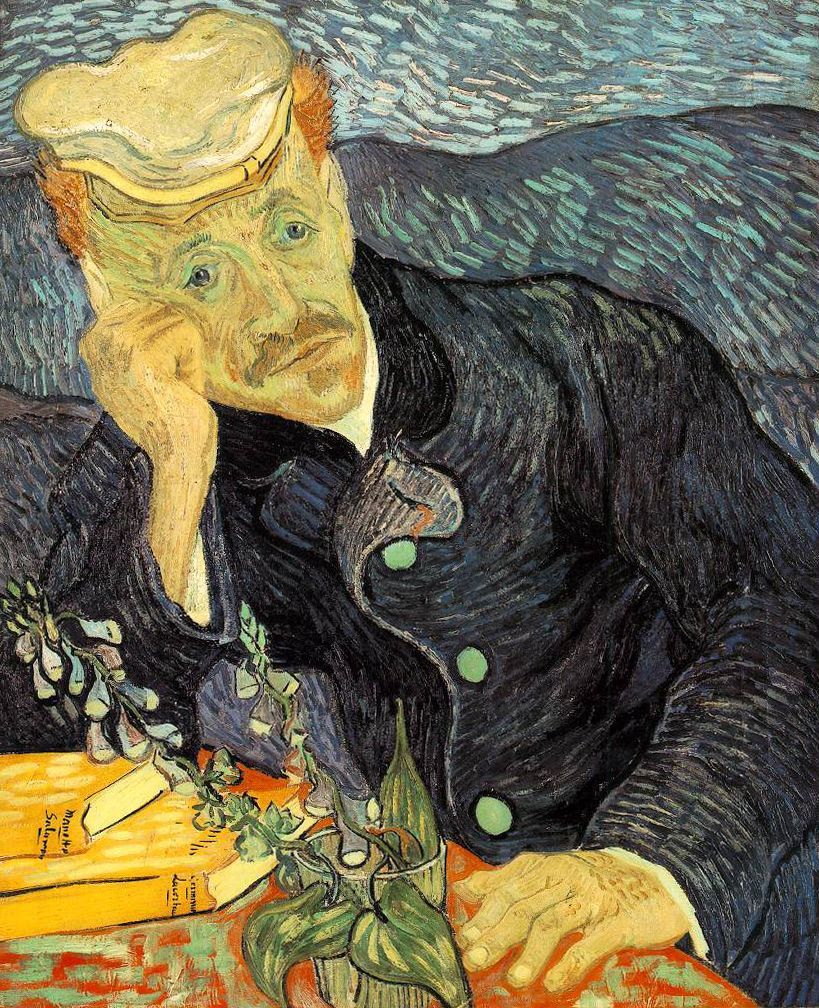
Portrait of Dr. Gachet · Vincent van Gogh · June 1890
Where's the realism?
Crooked brushstrokes. Skin tinged green. If likeness were the standard, this portrait was a failure.
He was after something else
Van Gogh wanted what that person felt inside. And he made four decisions to get there. Decisions you also make, every time you raise a camera — you just don't know it.
A pose
Head drooping, resting on the hand. Body tilted. This is the posture of melancholy, repeated in painting for centuries. You glance at it and already feel the weight, before even knowing who the person is.
A cor
Blue in the background, blue in the clothing, and the pale face in the middle of it. He chose the color that sadness had and surrounded the person with it.
O movimento
The background brushstrokes ripple and the wall seems to vibrate. A whole restlessness inside a completely still portrait.
O objeto
The little flower on the table is foxglove, from which heart medicine is extracted. It tells you that man is a doctor without spending a single word.
Notice something: none of these four decisions was his invention
The melancholy pose already existed. The blue of sadness already existed. The foxglove already meant something before he touched brush to canvas.
Van Gogh had a repertoire. He knew what to ask for.
That's all that separates you from a portrait that moves people — and it's the one thing nobody ever gave you.
Every work can be read in six layers. And every layer becomes a decision you make.
Luz
Where it comes from, what quality it has, what height it's at.
Sombras
Where they fall and what they deliberately hide.
Poses
Body, hands, head axis, gaze direction.
Objetos
What the person holds, what's in the scene.
Cores
The dominant palette and the emotion it carries.
Vestimentas
Clothing, fabric, accessory — what they say about who someone is.
Van Gogh used four of them in that single portrait. The 300 references answer all six, one by one, for you.
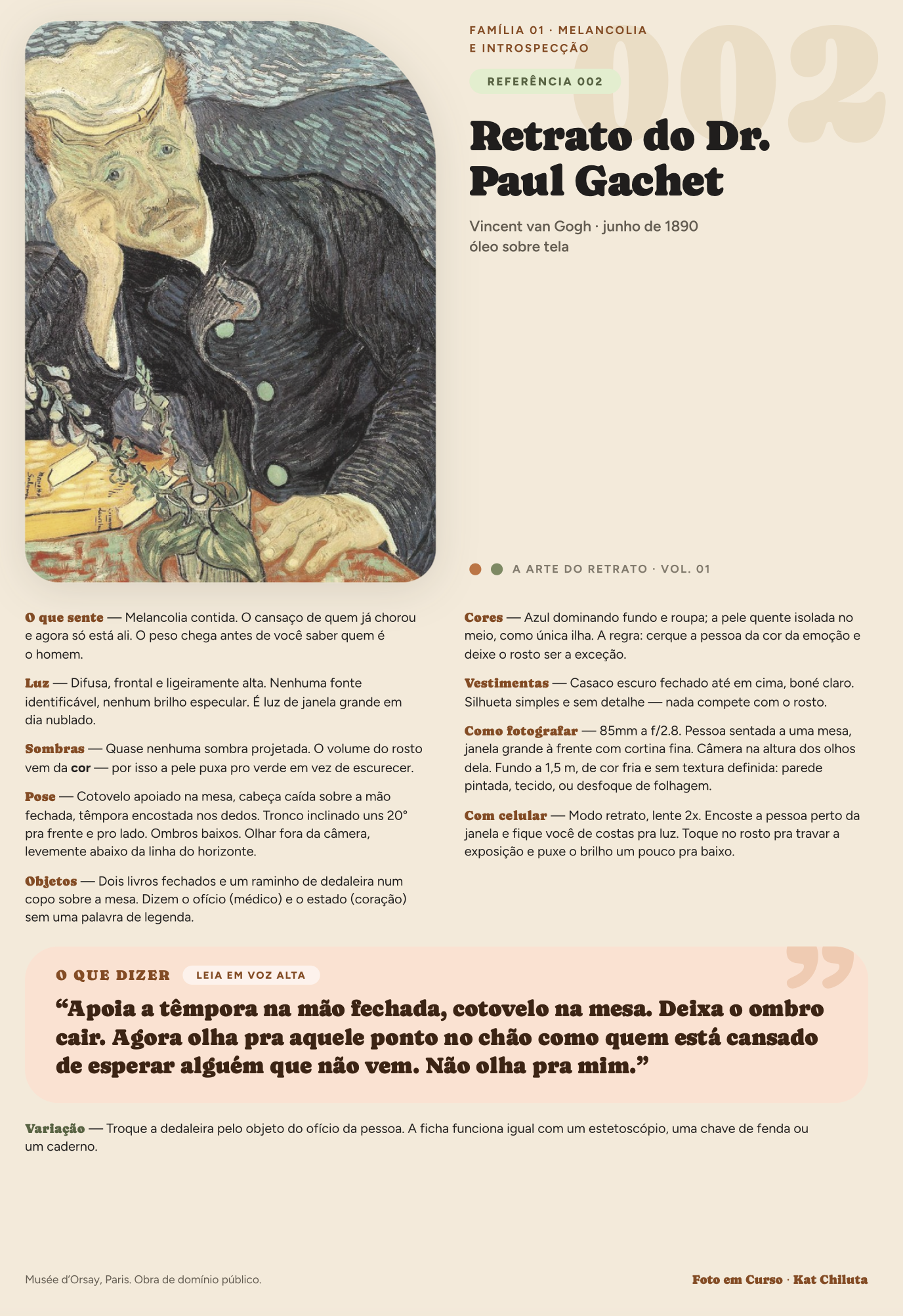
What does a reference look like inside the book?
Each of the 300 is a single page, with everything worked out. It's not inspiration — it's instruction.
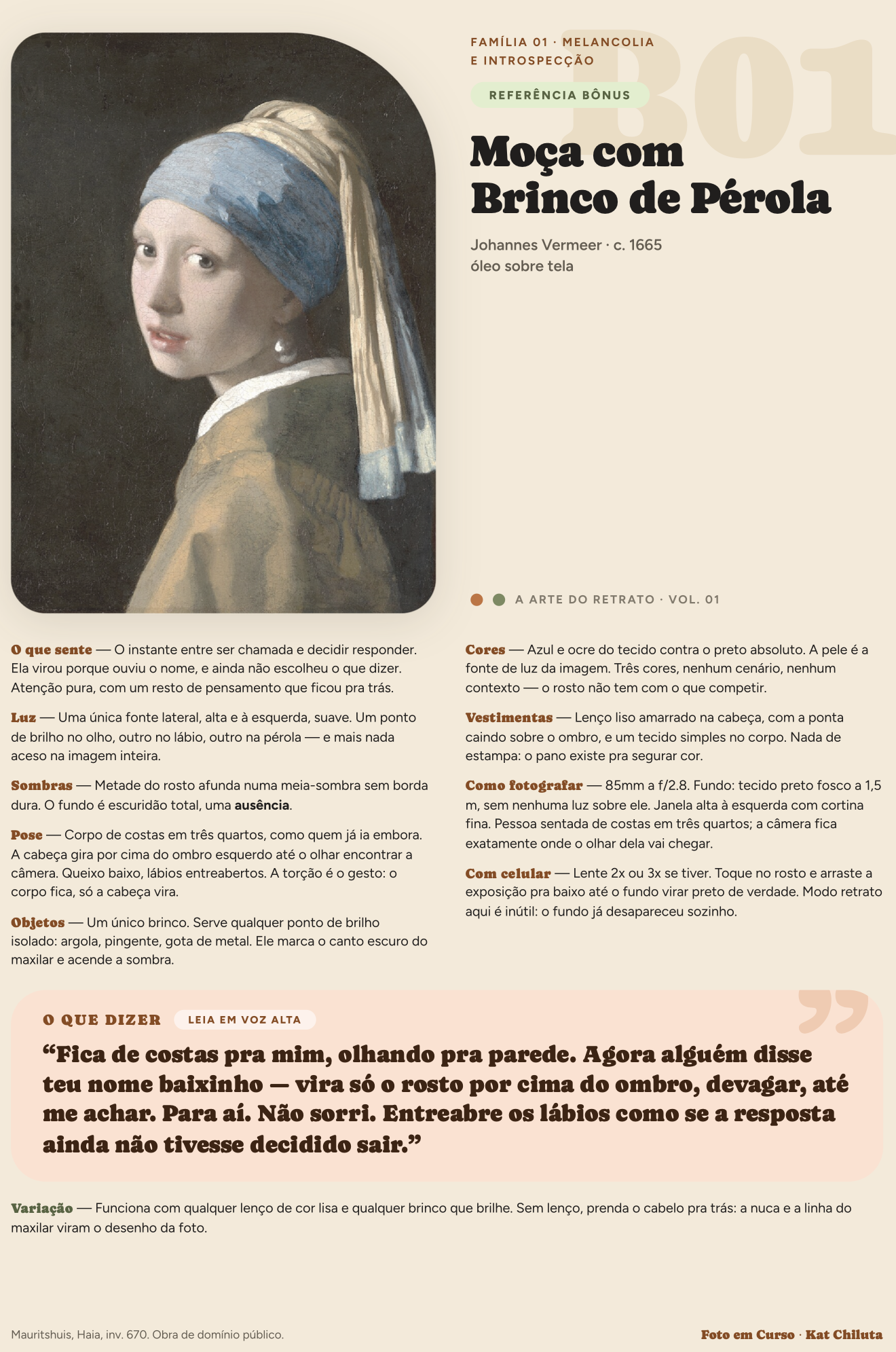
FAMILY 01 · MELANCHOLY · REFERENCE 007
Retrato do Dr. Gachet
Vincent van Gogh · 1890
What they feel: contained melancholy. The weight arrives before you even know who the man is.
Luz: diffuse, frontal and slightly high. Light from a large window on a cloudy day.
Sombras: almost none cast. The volume comes from color, not from darkness.
Pose: elbow on the table, temple resting on a closed hand, torso tilted 20°, shoulders low, gaze away from the camera.
Objetos: two books and a sprig of foxglove — they tell you the profession without a caption.
Cores: blue dominating background and clothing; warm skin isolated in the middle.
Vestimentas: dark closed coat, light cap. Simple silhouette, zero distraction.
Como fotografar: 85mm at f/2.8 · person seated at a table, large window in front with a thin curtain · camera at eye level · cool, textureless background 1.5 m away.
Com celular: portrait mode, 2x, place the person near the window and stand with your back to the light.
O que dizer pro modelo: "Rest your temple on your closed hand, elbow on the table. Let your shoulder drop. Now look at that spot on the floor like someone tired of waiting for someone who isn't coming. Don't look at me."
Variation: swap the foxglove for the object of the person's trade. Works just as well with a stethoscope or a screwdriver.
That second-to-last field — the literal line you say — is what nobody in the market gives you.
"Ok… but what am I going to do with this information?"
That's the question everyone asks when someone starts talking about art history. The answer is: everything. Each of these works solved a problem you have today.
Platon puts a 14th-century halo on today's presidents
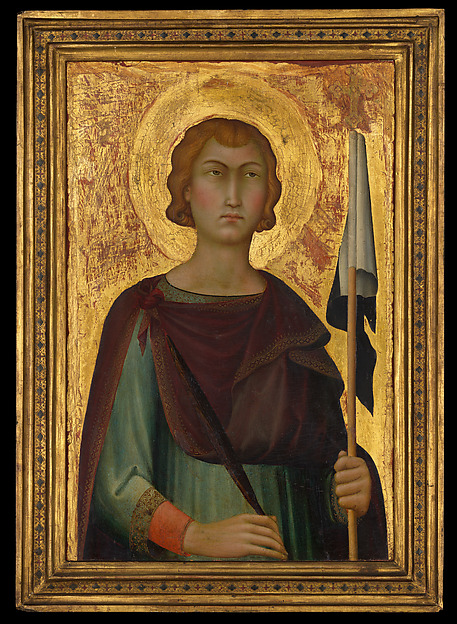
Saint Ansanus · Simone Martini · c. 1326 — the gold disc behind the head
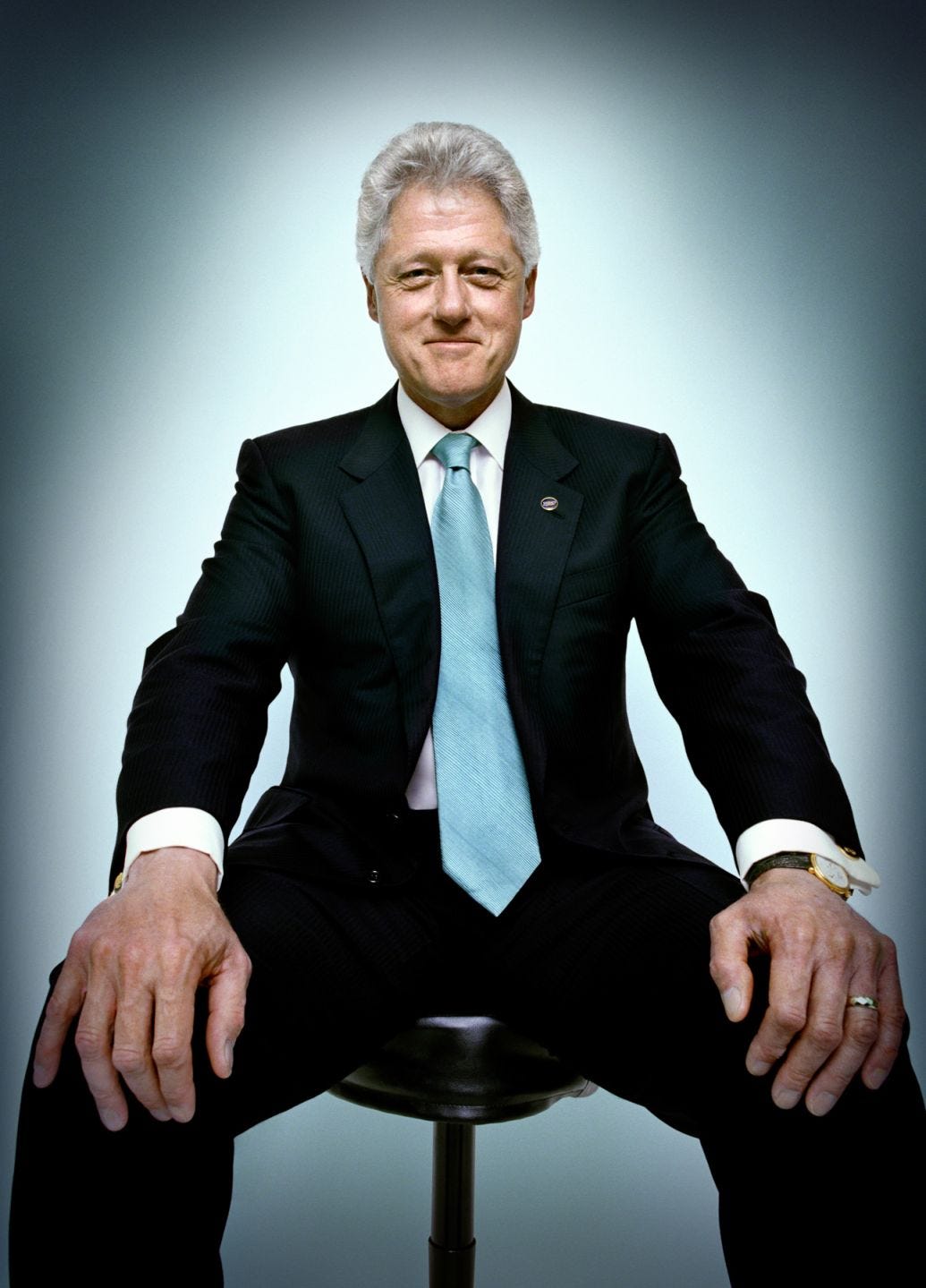
Bill Clinton · Platon — the same disc, now made of light
Platon photographs heads of state, generals and activists. In a good number of these portraits there's a disc of light behind the person's head: dark background at the edges, a bright circle in the middle, the face exactly inside it.
This circle isn't a studio effect. It's the halo of the saints from old painting. Simone Martini painted the same thing in gold leaf in 1326, for the same reason: to say "this person matters" before you read any caption.
In practice it's two things: a plain background and a light aimed at the background, behind the head, about a meter away. Seven centuries apart — and your eye obeys just the same.
Goya's formula reappeared on a TIME cover shot on an iPhone
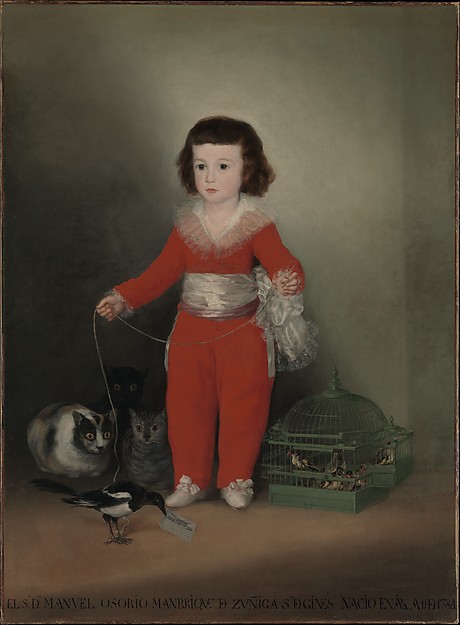
Manuel Osorio · Goya · 1787-88 — red at the center, everything around it muted
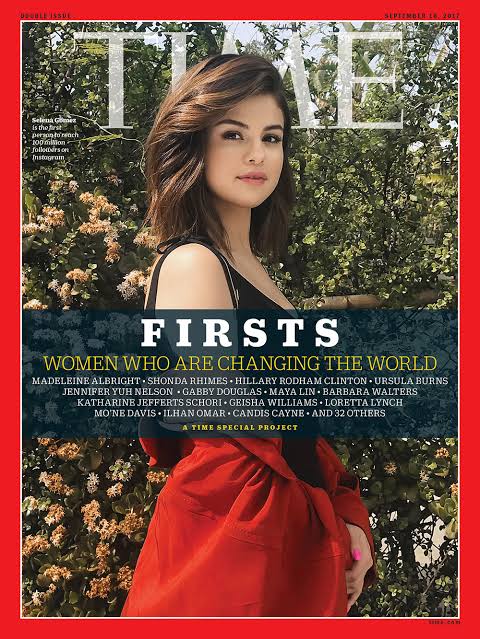
Firsts Project · TIME · Luisa Dörr · 2017 — shot on iPhone
Goya figured out in 1788 how to make someone stand out with no equipment at all: a background that doesn't compete, a patch of red at the center, the person standing still inside it. The viewer's eye has nowhere to escape to.
In 2017, Brazilian photographer Luisa Dörr shot the Firsts project for TIME magazine — 46 women, several covers — entirely on an iPhone. No studio, no lighting crew, no expensive lens. What she brought was repertoire: the same color decision, the same person isolated against a busy background that doesn't compete for attention.
It wasn't the equipment. It was knowing what to put in front of the camera.
And that goes for any decision you make in front of a person:
It's not a museum. It's a bank of solutions.
It works in the thousand-dollar shoot and it works in your selfie
The decisions are exactly the same. Only who's holding the camera changes.
You photograph people for social media
Friends, family, your own content. You want your photos to stop looking like everyone else's — and you don't want to study for two years to get there.
You want to improve your own photos
Profile picture, selfie, that photo someone takes of you that never comes out good. When you understand pose, light and color, you know what to ask for — and you know how to position yourself.
You take photography seriously
You already deliver well, but when it's time to direct the model you still freeze up inside — you don't know what to ask for. It's not a lack of talent: almost nobody in your market learned to direct, only to press the button. Here you get 300 ready-made paths: you show up already knowing what to ask for, and the insecurity of directing ends.
Every reference includes the camera version and the phone version. You apply it today, with what you already have in hand.
The 6 volumes you receive
Organized by what you want the person to feel — not by century or art movement. That's how people actually search.
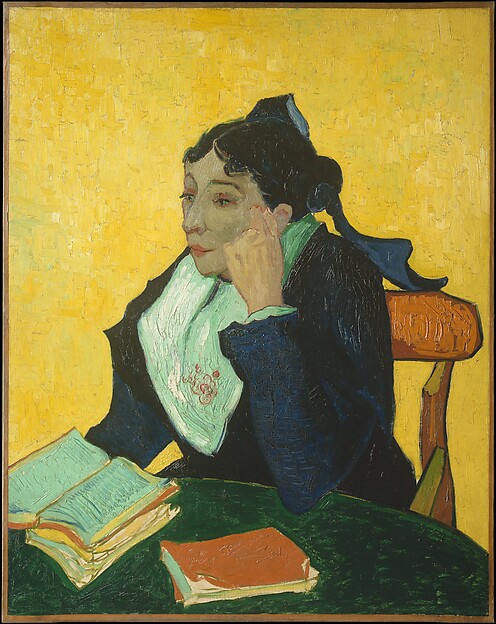
Volume 01 · Melancholy and introspection
50 references. Head resting, gaze off-frame, folded body, diffuse light. From Van Gogh to Hopper, from Matejko to Peter Lindbergh.
Volume 02 · Power and authority
50 references. Frontality, low camera angle, firm hands, dark background. From Velázquez and Sargent to Platon and Yousuf Karsh.
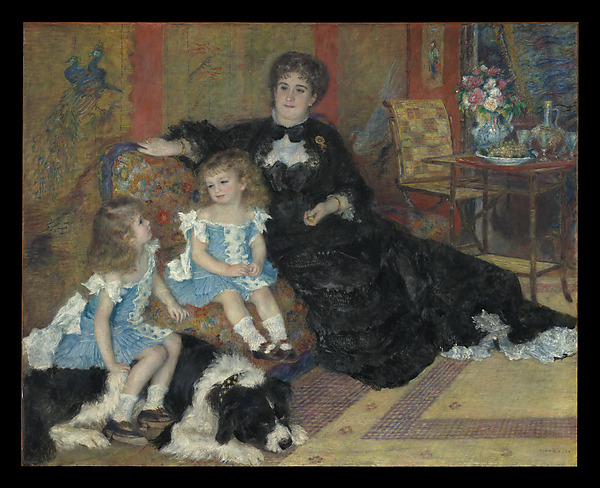
Volume 03 · Tenderness and intimacy
50 references. Closeness, touch, lowered gaze, window light. From Fayum portraits and Vermeer to Annie Leibovitz and Meg Loeks.

Volume 04 · Joy and vitality
50 references. Movement, saturated color, open body, golden hour. From Renoir and Klimt to Walter Firmo and Ryan McGinley.
Volume 05 · Mystery and tension
50 references. Hard shadow, crop, partial face, direct gaze. From Caravaggio and Rembrandt to Magritte, Lee Jeffries and Bruce Gilden.
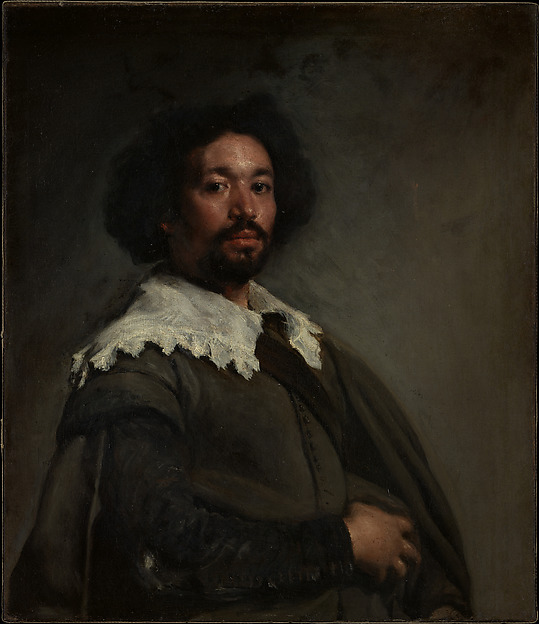
Volume 06 · Dignity and work
50 references. The person with their trade, object in hand, real setting. From Velázquez and Vermeer to Sebastião Salgado and Diego Bresani.
The student who did exactly this — and won an award in Italy
The email Guilherme sent Kat on October 3, 2022
Guilherme Lima made seven portraits. Each one built on a work of art. He copied none of them: he read the layers of each and remade them with real people, in his own world.
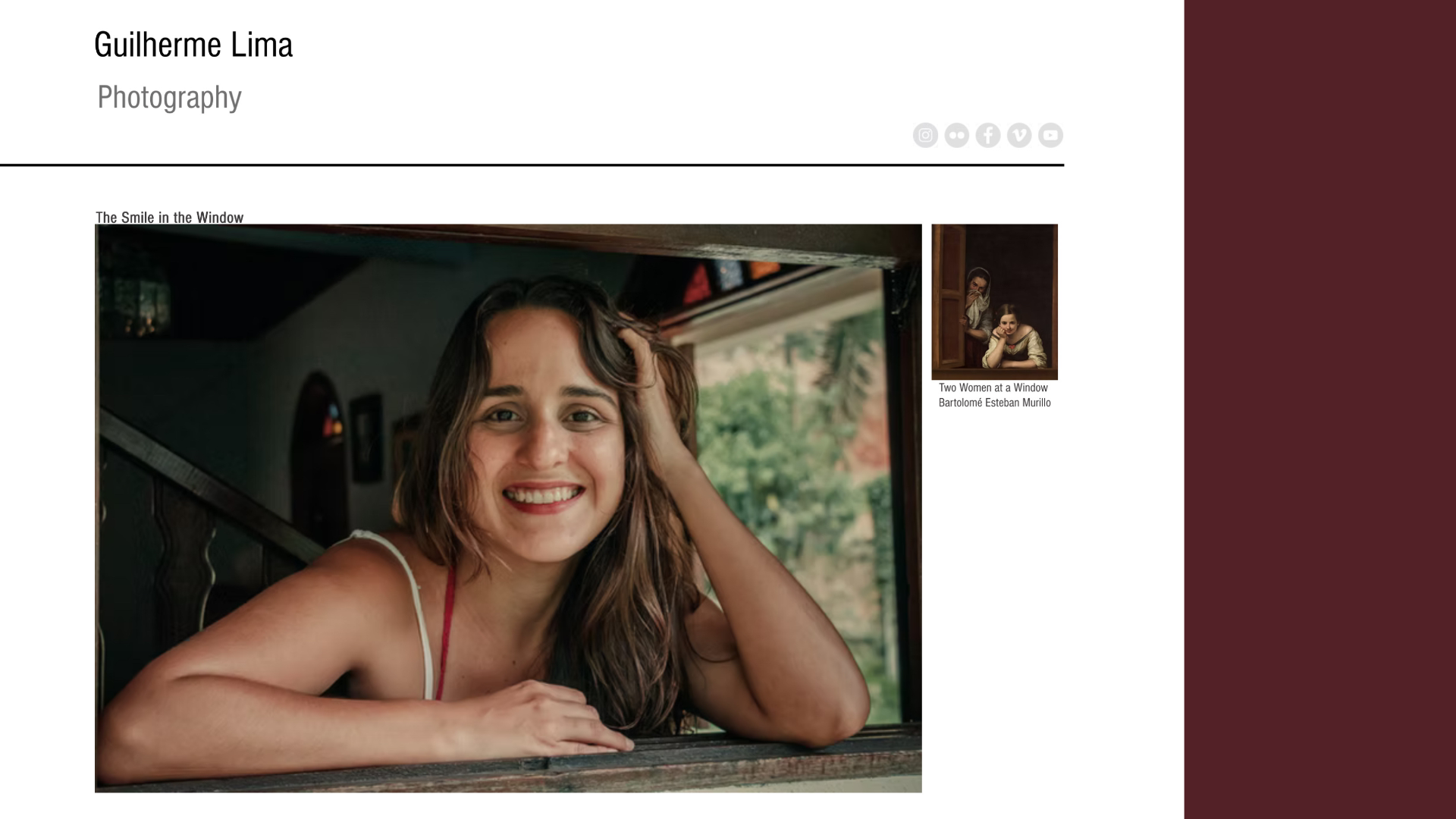
The Smile in the Window · based on Two Women at a Window, by Murillo
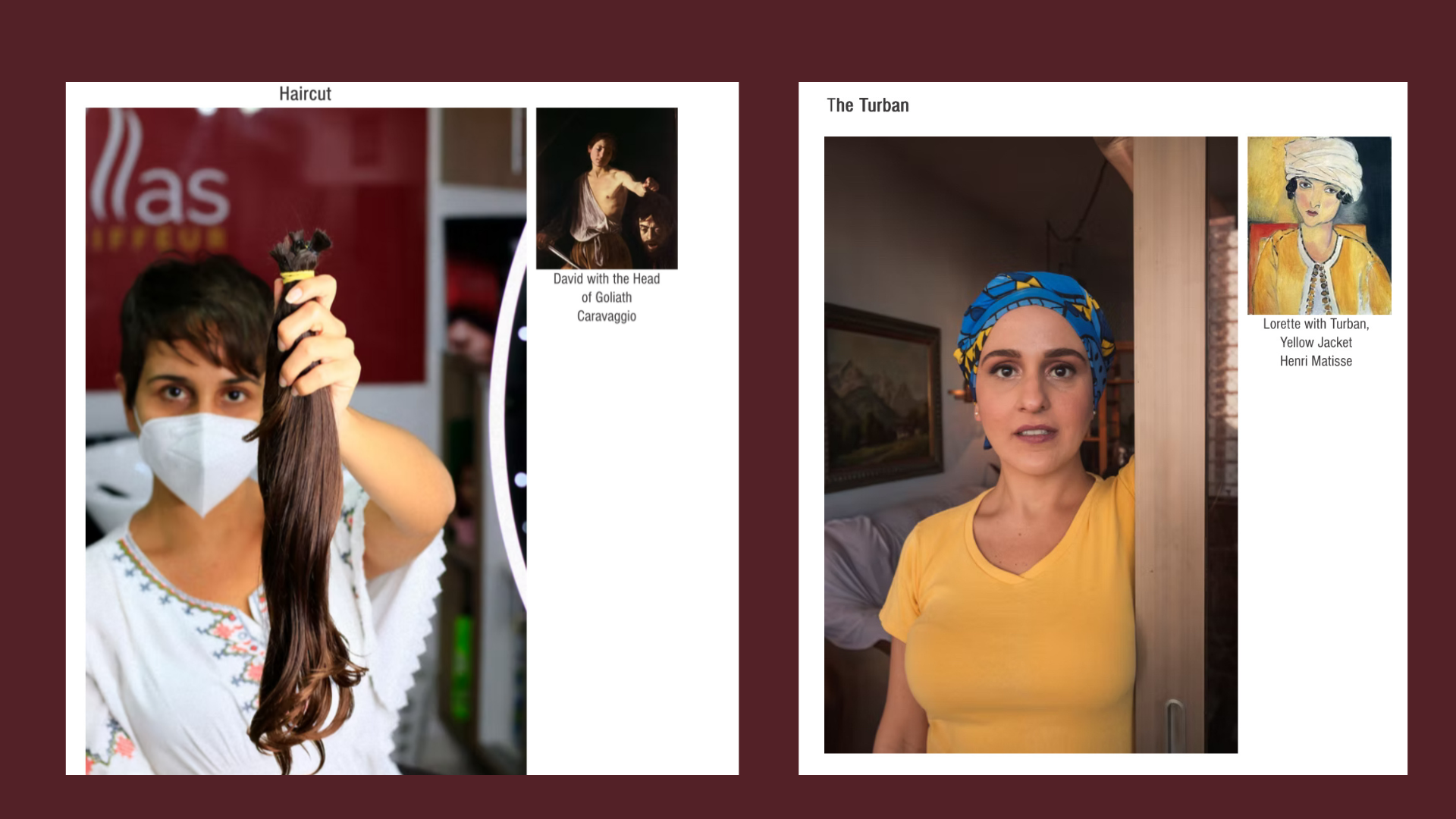
Haircut · based on David with the Head of Goliath, by Caravaggio · The Turban · based on Laurette with a Turban, by Matisse
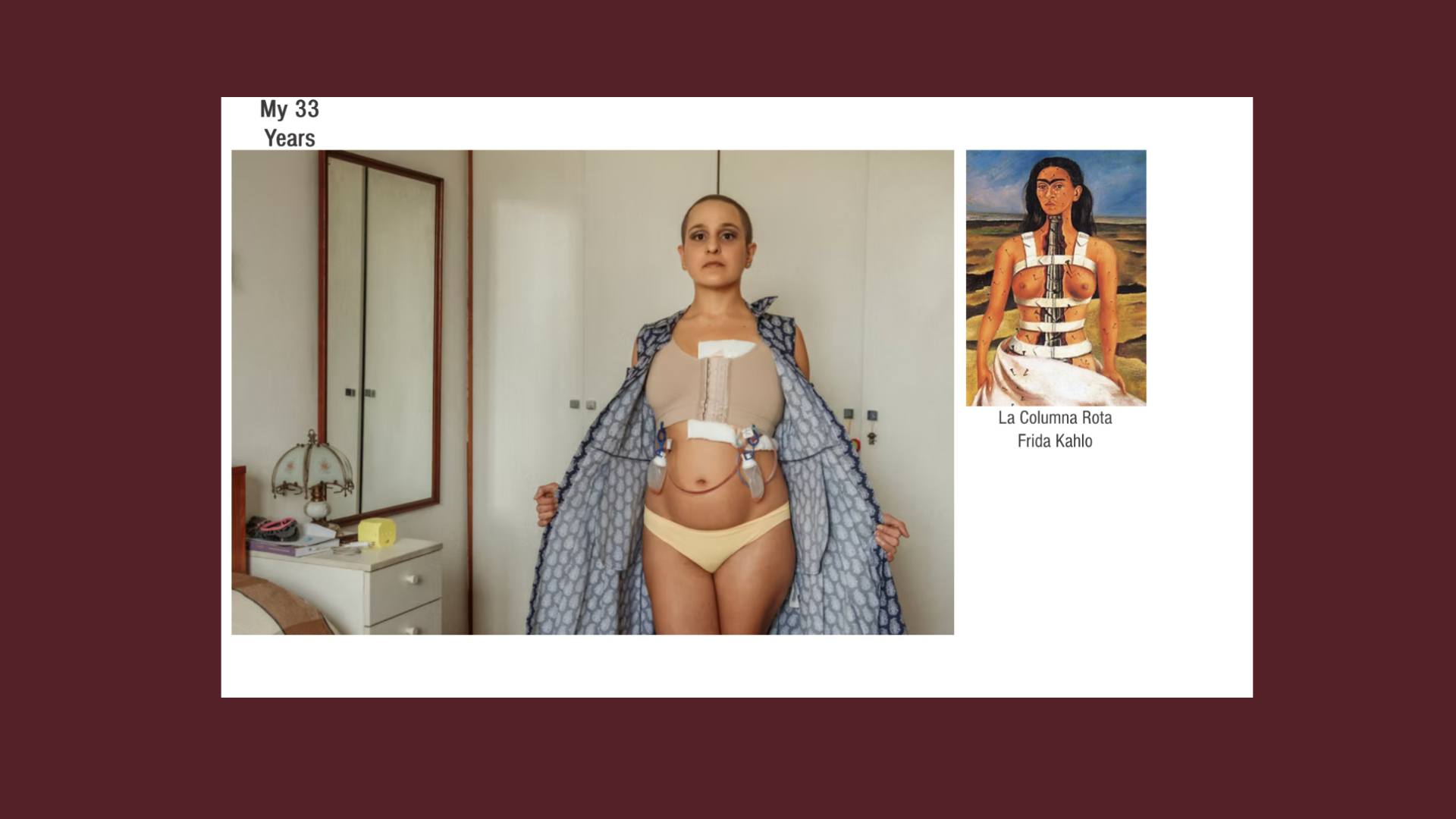
My 33 Years · based on The Broken Column, by Frida Kahlo
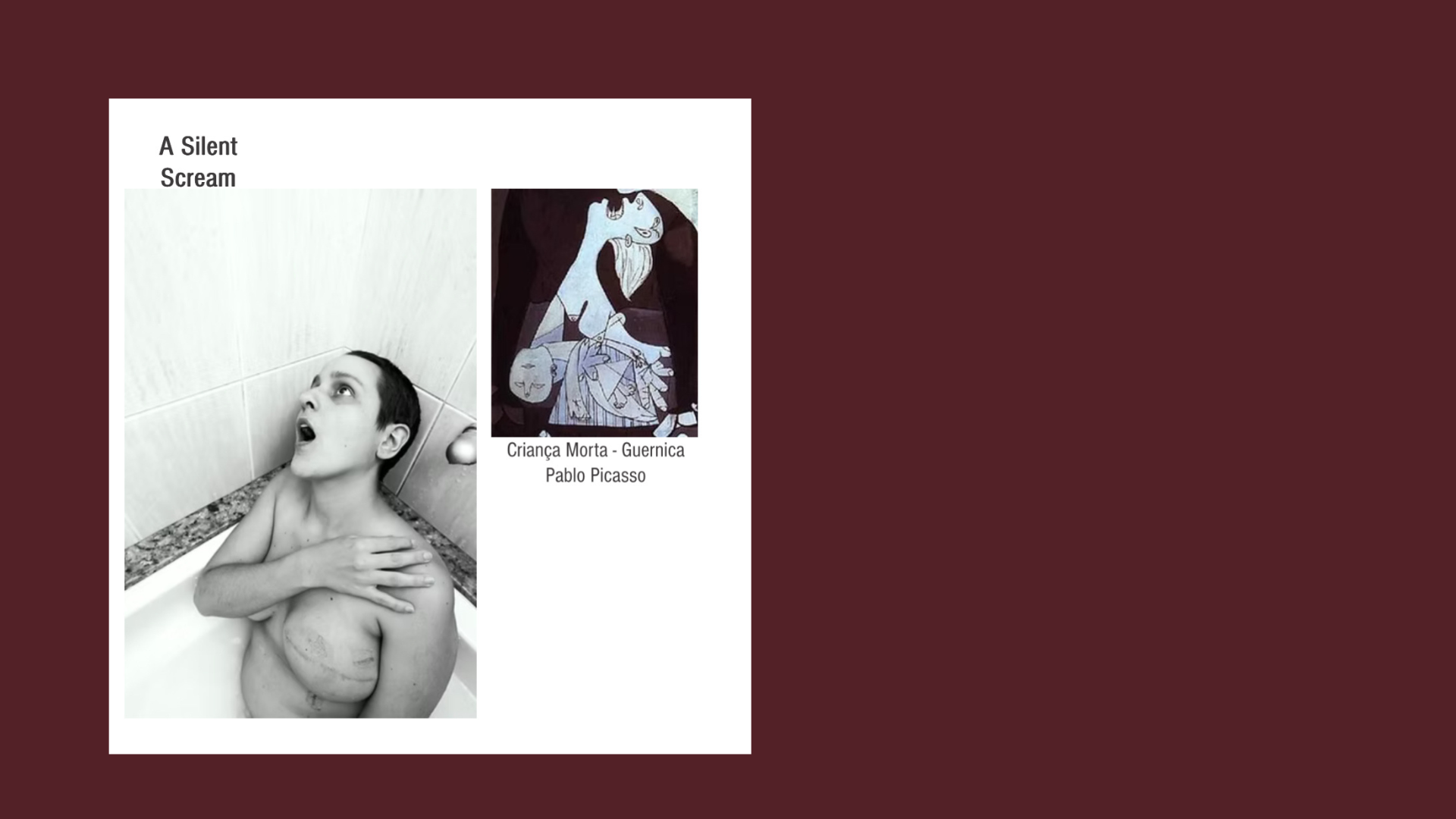
A Silent Scream · based on the dead child in Guernica, by Picasso
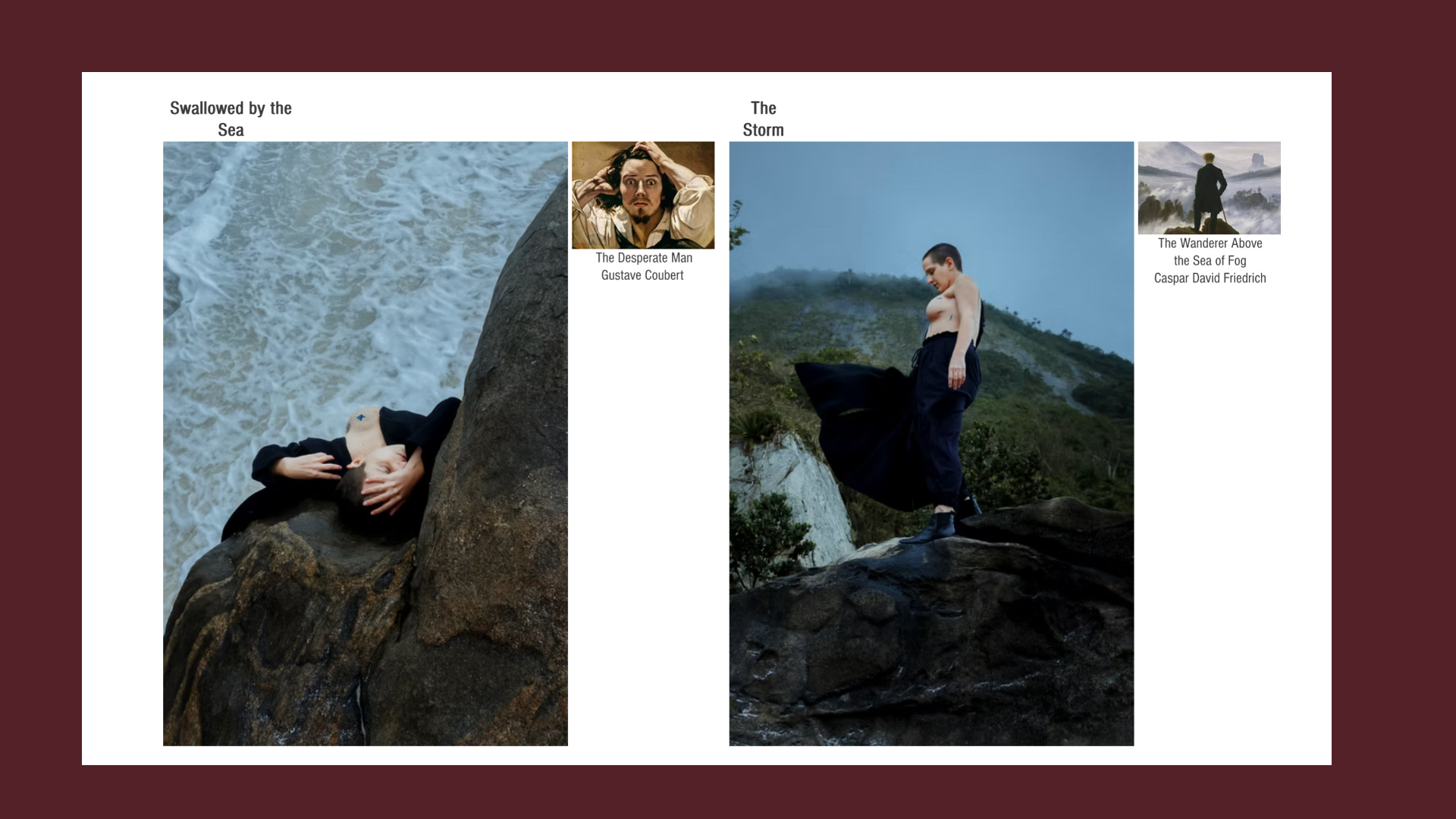
Swallowed by the Sea · based on The Desperate Man, by Courbet · The Storm · based on Wanderer Above the Sea of Fog, by Caspar David Friedrich
He used the same camera as always, the city where he lives, and people he knows. What changed was what he knew how to ask for: from each work he took the light, the pose, the color and the object, and reassembled it all with whoever was nearby.
None of the seven photos looks like the original painting. And all of them carry what the painting made you feel.
Take a peek inside 👀
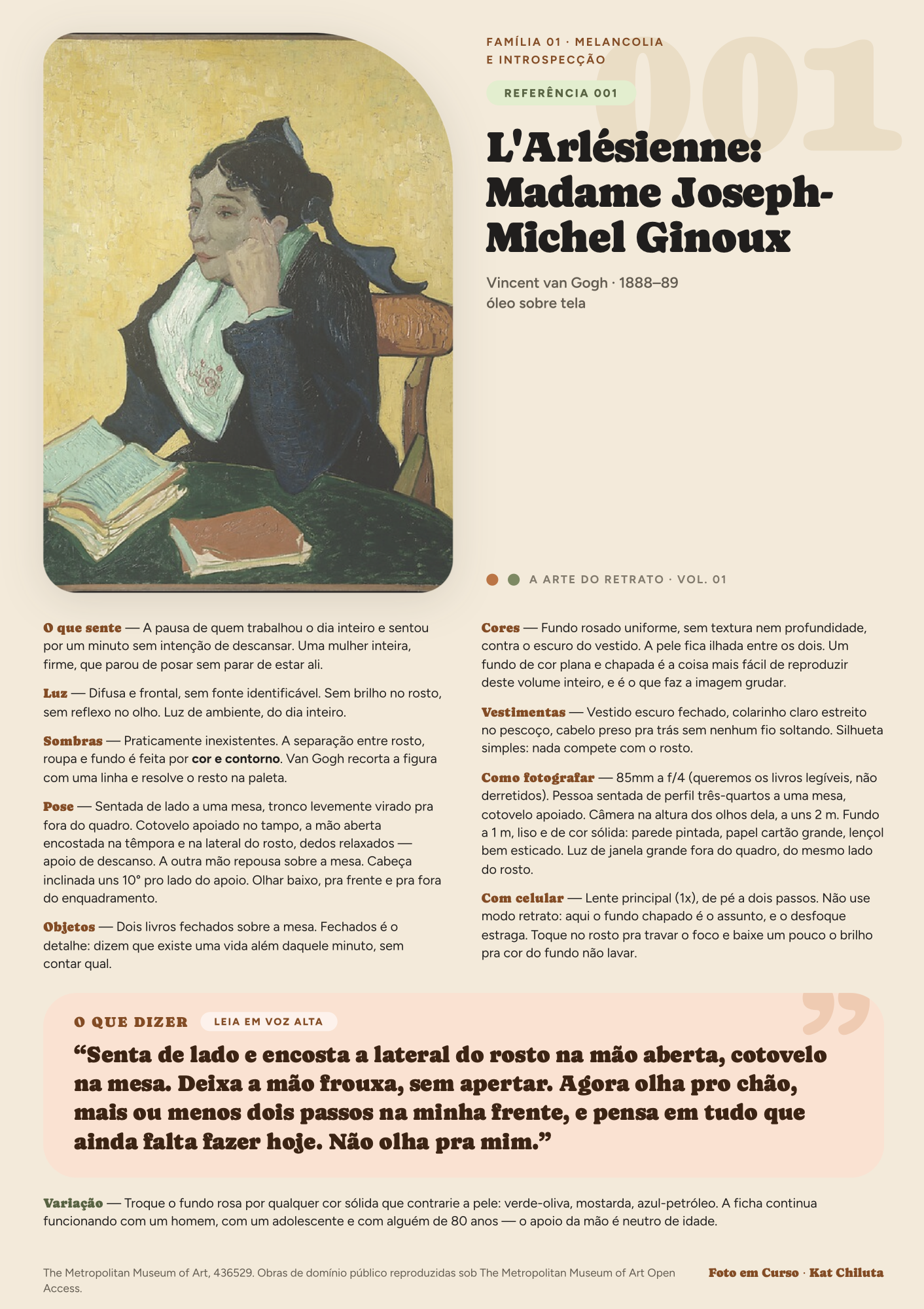
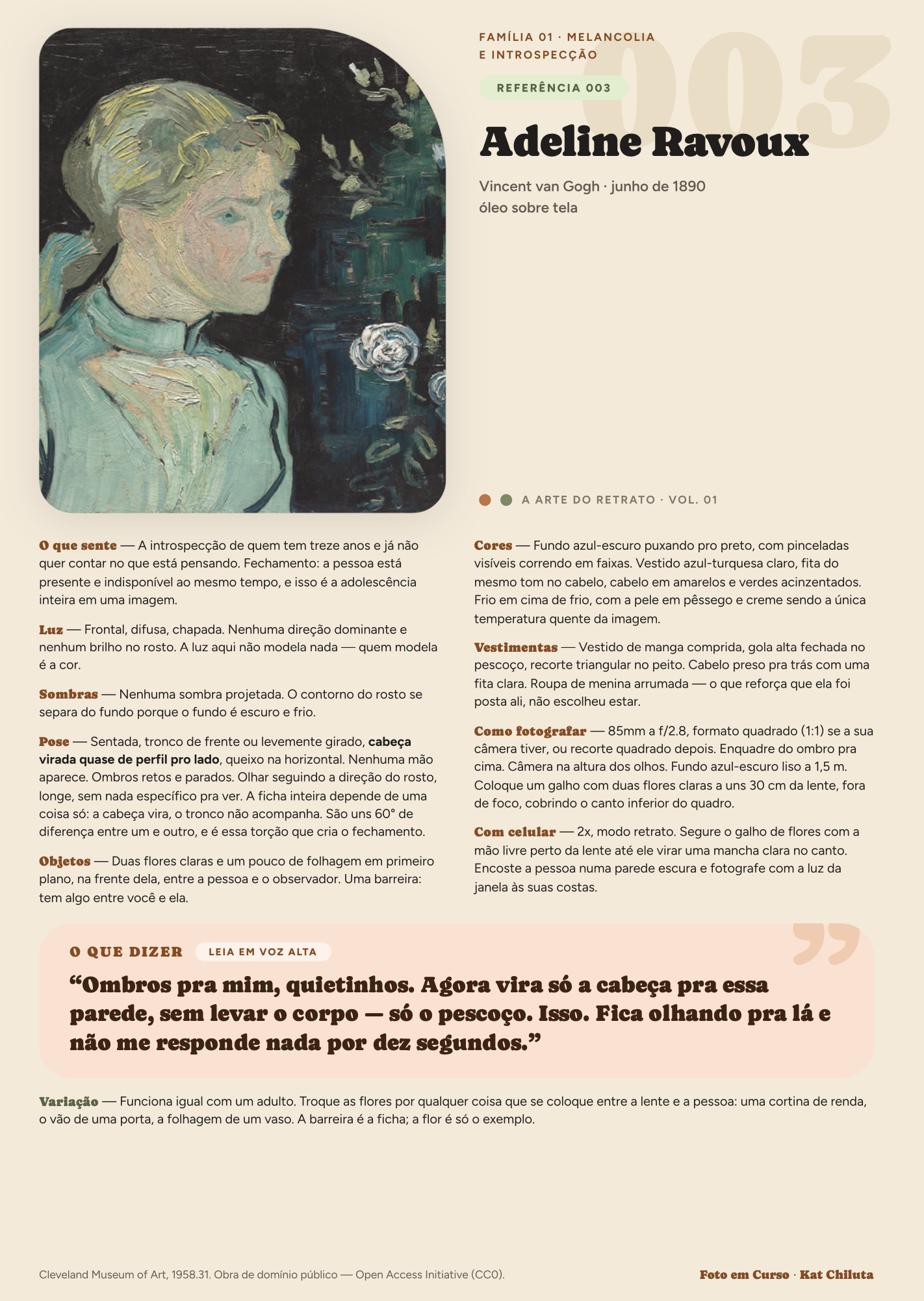
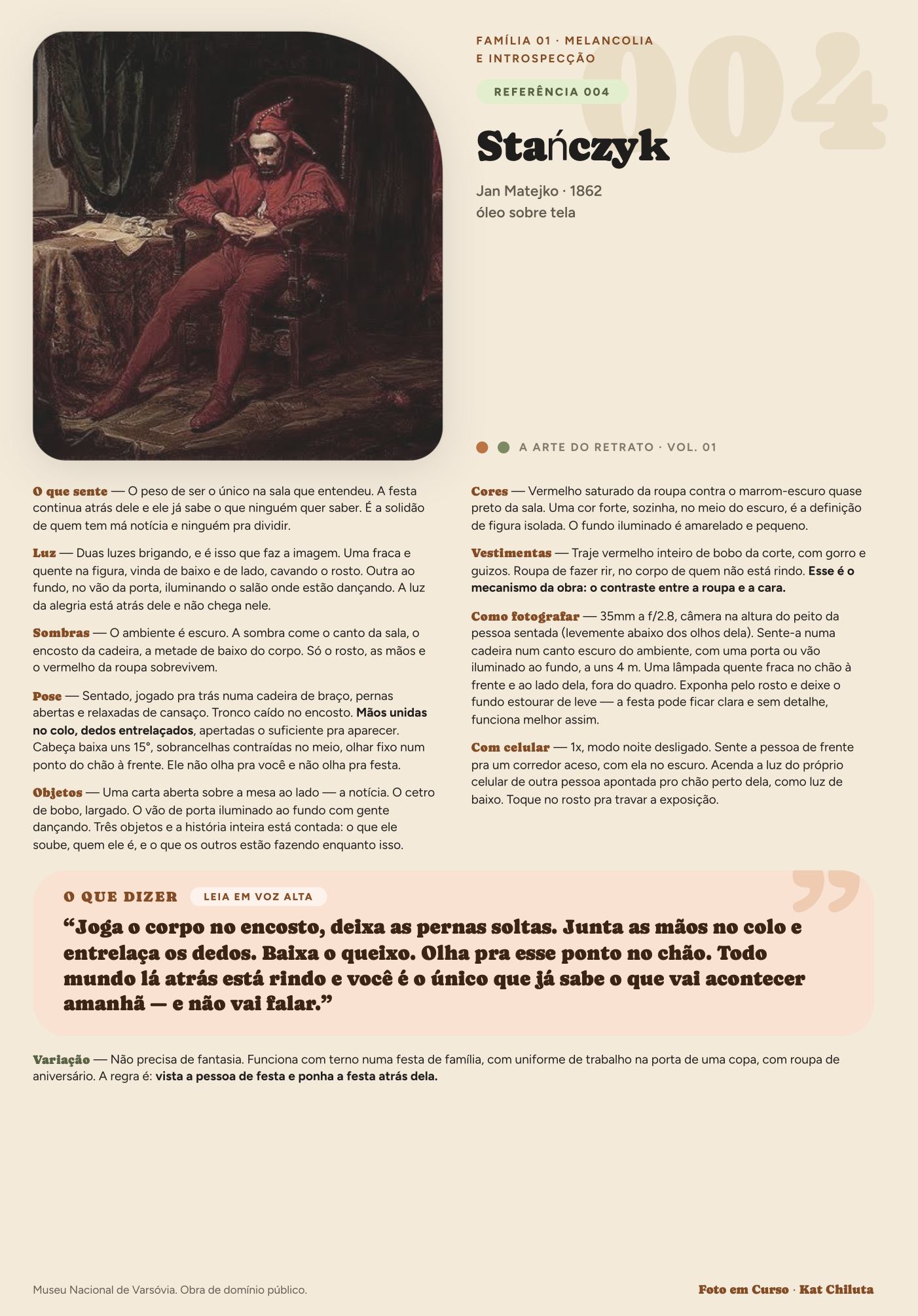
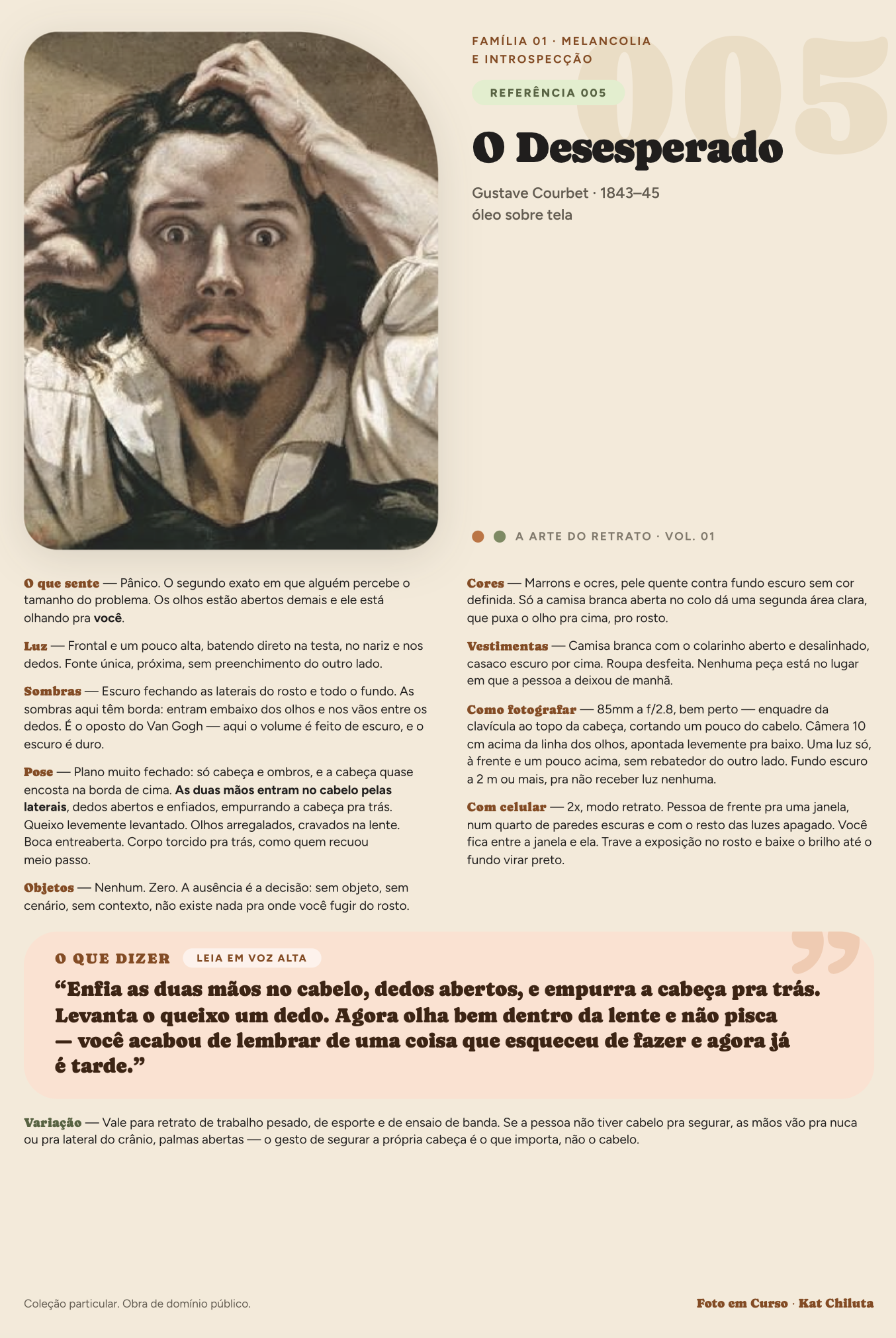
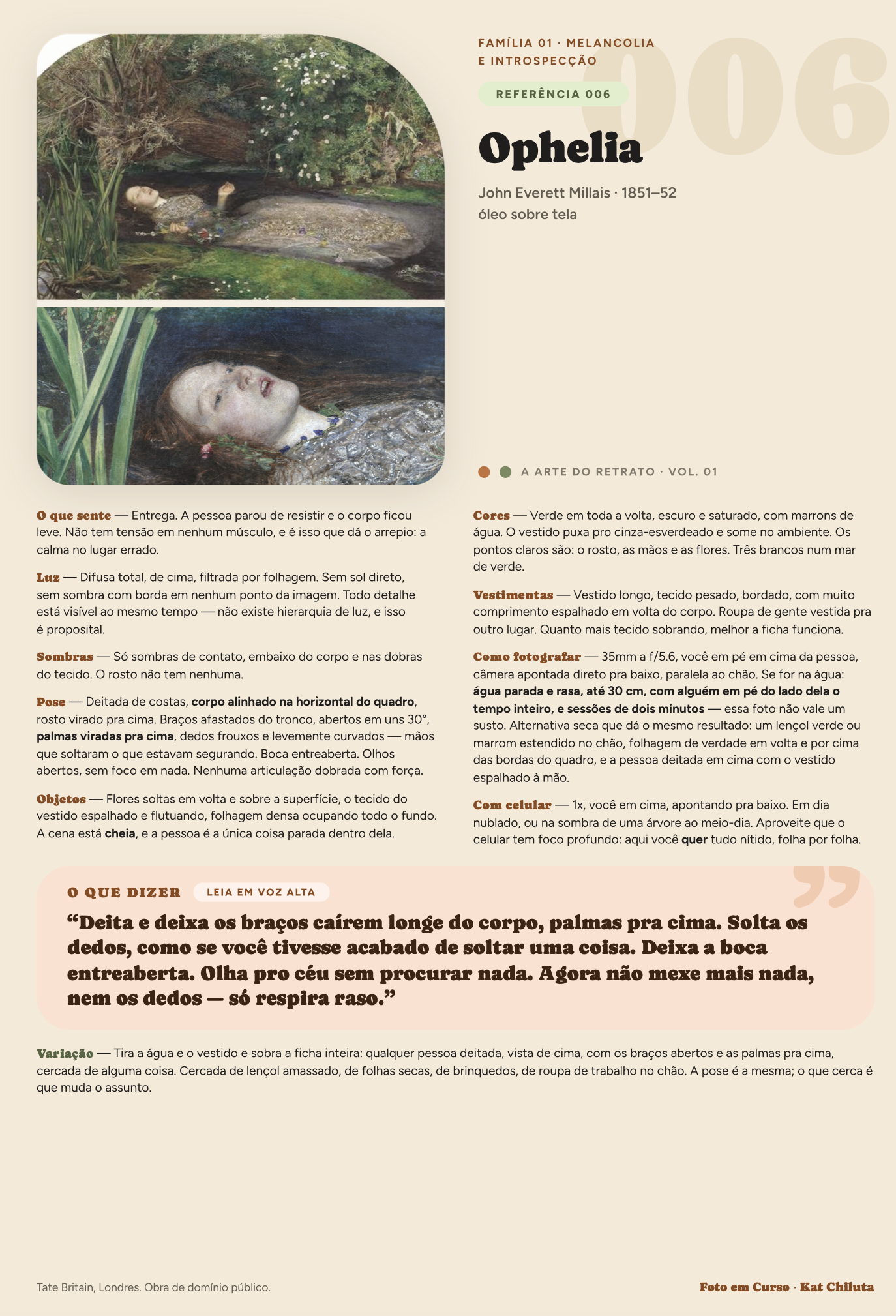
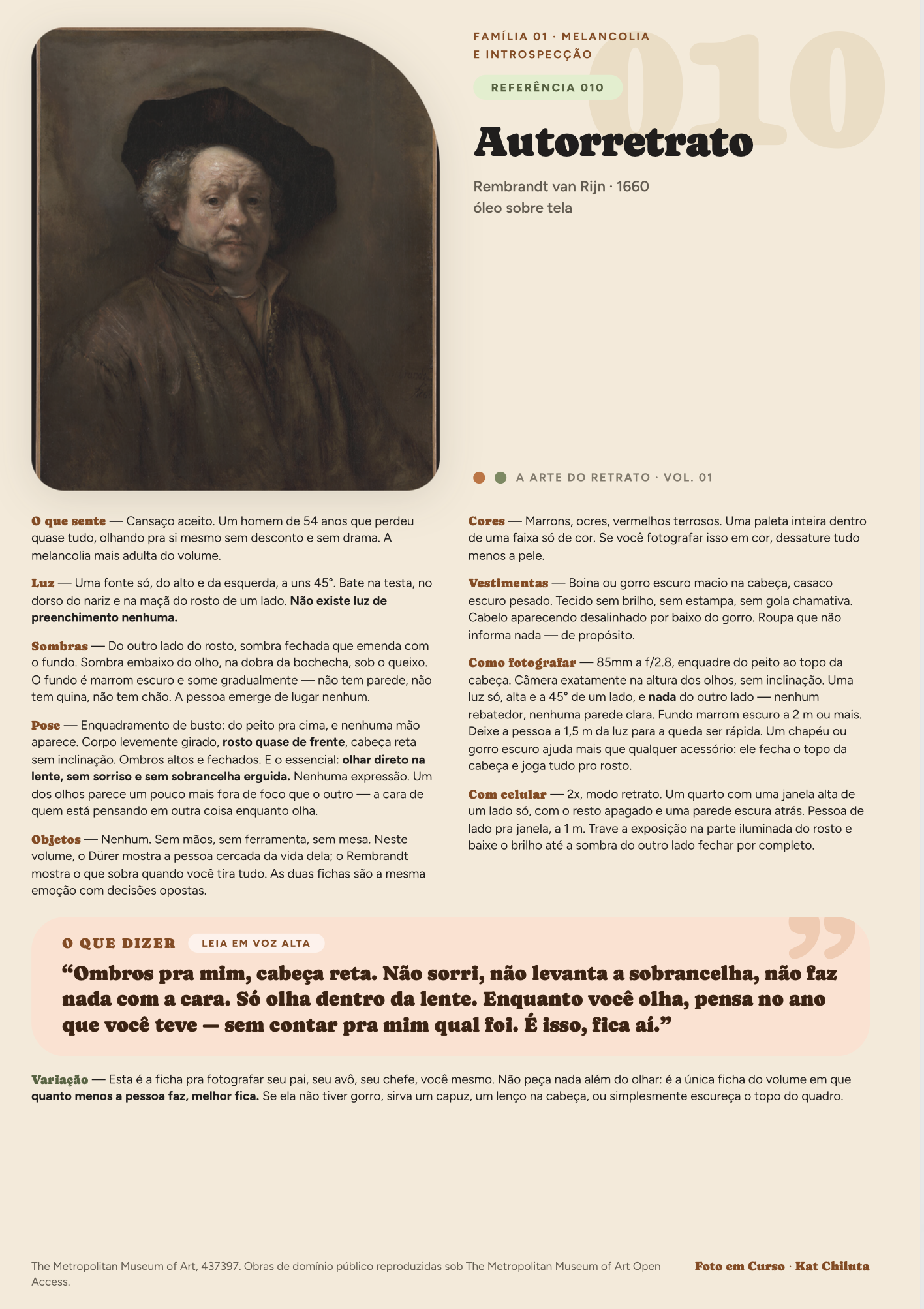
👆 click the right half to flip the page
WHAT YOU GET
The 6 complete volumes — 300 references
From US$397 (the live workshop price) down to
one payment, via Pix or card
Founding batch: you get all the support material today, and the volumes arrive in batches over the coming weeks. After launch the pack goes up to US$97 — whoever joins now pays US$44 and gets every future update.
Relax: your risk is zero!
If you feel it's not for you, just request a refund within 15 days — we'll return 100% of the value, no questions asked and no red tape. Either you win, or you win.
What people who already used the method say
Who created the method
Polish-born, Brazil-based Katarzyna Chiluta brings the knowledge from her 3 degrees — in Rome, Poland and Brazil (art history, photography and pedagogy) — that turns a portrait into a work of art.
Coordinator and teacher of the photography course at Instituto Foto em Curso, in Brasília, she has already trained more than 2,000 photographers. Speaker at Brasília Photo Show, holder of 2 international photography awards, and exhibitions like Domus, with 200 thousand visitors at Museu da República.
Her own signature portrait project — APRÁTICOS — and her reinterpretations of Frida Kahlo, Magritte and Jan Matejko are proof that she practices what she teaches.
Frequently Asked Questions
Do I need a professional camera?▾
No. Every reference includes the camera version and the phone version. A good portrait never depended on expensive gear — it depended on knowing what to ask for.
Is this for people who only post on social media?▾
Yes, and that's where the difference shows up fastest. You'll stop taking the same photo everyone else takes and start making images that people stop to look at.
What about my own photos and selfies?▾
Those too. When you understand pose, light and color, you know how to position yourself and what to ask for. The person who knows how to direct a portrait is the one who looks best in their own.
Do I need a professional model?▾
No. Most of the references work with whoever is around: your mother, a friend, a neighbor. Each card gives you the exact line to say to someone who has never posed in their life.
Do I need to know art history?▾
You don't need to know anything. We won't be memorizing dates or names. The works come already translated into practical instruction — you apply first and understand later, if you want to.
When do I get the 6 volumes?▾
The support material (studio handbook, lighting setups, model direction) arrives the minute you buy. The 6 volumes are released in batches over the coming weeks, and you're notified by email with each release.
How long do I have access?▾
Forever, including every future update — without paying again.
At this point, you have two options
Close this page and keep saying "relax, make yourself comfortable" — or invest less than the price of a pizza in 300 poses that painting took 500 years to figure out, and arrive at your next photo knowing exactly what to ask for.
JOIN WHILE THIS OFFER IS OPEN ➜
The Art of Portraiture © 2026 — All rights reserved · Instituto Foto em Curso
Public domain works reproduced under The Metropolitan Museum of Art Open Access. Photographs by Guilherme Lima used with permission. Portrait of Dr. Gachet (Van Gogh, 1890): public domain, via Wikimedia Commons. Portrait of Bill Clinton by Platon and Firsts project cover (TIME, 2017) by Luisa Dörr — rights belong to their respective authors.